Testing Sensirion's STC31 CO2 sensor
 Yoctopuce has been offering a CO2 sensor for some time now. The current model, the Yocto-C02-V2, has a measure range of 0-40000ppm, or 0-4%. This is sufficient for most common applications. But what if you need to measure higher concentrations? Sensirion now offers the STC31 sensor with a measure range from 0 to 100%.
| No comment yet | Read more... |
Displaying solar production on a YoctoDisplay
 This week, we created a small program that displays the current production of the building's photovoltaic panels on a Yocto-MaxiDisplay. To do this, we wrote a small Python script that retrieves production information from the building's Envoy S Metered gateway.
| No comment yet | Read more... |
Firmware update on remote devices
 A year ago, we announced a new tool for monitoring your systems based on Yoctopuce devices via the Internet, called VirtualHub for Web. This tool uses our HTTP callback mechanism to interact with modules, while offering a Web interface very similar to the usual YoctoHub or VirtualHub interface. The first version nevertheless had certain limitations, which we are gradually working to reduce...
| One comment | Read more... |
Seeed Studio's reTerminal screen
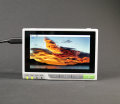 For several years now, the Raspberry Pi Foundation has been marketing 7-inch screens into which you can install a Raspberry Pi (sold separately) to create an all-in-one system. At Yoctopuce, we even have several that we use every day to monitor various experiments. But when we stumbled across SeeedStudio's reTerminal, we were keen to test it out to see if it could be used as an alternative.
| No comment yet | Read more... |
First tests of the Raspberry Pi 5
 Announced a short while ago, the Raspberry Pi 5 is starting to be available. This week, we were finally able to get our hands on an 8Gb version and test whether the Raspberry Pi 4's USB stack problems have been solved.
| No comment yet | Read more... |
1 ... 10 ... 20 21 22 23 24 25 26 27 28 29 30 ... 40 ... 50 ... 60 ... 70 ... 80 ... 90 ... 100 ... 110 ... 120 ... 130 ... 140 ... 150 ... 154