A new autoplacer robot
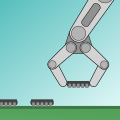 After 15 years of loyal service, our first autoplacer robot is reaching the end of its life. It's still working well, but given the difficulty in sourcing replacement parts, the manufacturer informed us this Spring that its support contract would end at the end of the year. So we had to break open our piggy bank to upgrade this key piece of equipment in our production process...
| No comment yet | Read more... |
Monitoring a parking space with Home Assistant
 This week, we'll look at how to set up a parking space occupancy sensor in Home Assistant. To do this, we'll use a Yocto-RangeFinder.
| No comment yet | Read more... |
New: Yocto-RFID-15693-C and Yocto-MaxiDisplay-C
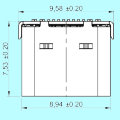 This week, Yoctopuce is announcing the last two modules to be upgraded to USB-C connectivity: the Yocto-RFID-15693-C and the Yocto-MaxiDisplay-C. Let's take a closer look...
| 2 comments | Read more... |
Improvements to VirtualHub (for Web)
 This week, we are releasing an update to VirtualHub (for Web), our tool for remotely monitoring a system based on Yoctopuce modules. We've made a few improvements to it. Let's see what they are...
| No comment yet | Read more... |
Test of the Python Arcade library
 A few weeks ago, we built a system to measure the SAG of a bike's suspension, and we teased you with the promise of an improved version of the software. A promise is a promise: this week, we've created a graphical version of the app. To do this, we used the Python Arcade Library.
| No comment yet | Read more... |
1 2 3 4 5 6 7 ... 10 ... 20 ... 30 ... 40 ... 50 ... 60 ... 70 ... 80 ... 90 ... 100 ... 110 ... 120 ... 130 ... 140 ... 150 ... 157