VirtualHub (for Web) Advanced Installation Guide
 In the last few weeks, we have shown you our new web solution to control and remotely monitor Yoctopuce systems. We took care to provide you with a tool allowing you to perform the installation in a few clicks in most cases, but as we quickly met users for whom this was not enough, here is a more detailed installation guide of VirtualHub (for Web).
| No comment yet | Read more... |
New: Yocto-Visualization (for web)
 This year, Santa Claus is a bit early. After offering you last week a web version of the VirtualHub, Yoctopuce is now offering you the web version of Yocto-Visualization, our ever-popular application that allows you to visualize Yoctopuce sensor data. Let's unwrap your gift together, shall we...
| No comment yet | Read more... |
New: a VirtualHub that works through the web
 When setting up an automation or measure system, it is essential to be able to monitor it remotely and easily. Today, we offer you a new solution to monitor and control your Yoctopuce-based systems via the Internet, which you can easily install on (almost) any web host: here is the VirtualHub for Web.
| 6 comments | Read more... |
Display your Todoist tasks on a Yocto-MaxiDisplay
 A few years ago, we embedded a Yocto-MaxiDisplay in a kitchen. This device displayed upcoming events by connecting itself to a Google agenda. 8 years later, the system still works, but instead of displaying a calendar, we would like it to display the items of a Todoist to-do list.
| No comment yet | Read more... |
A WiFi-driven LED aquarium lightning
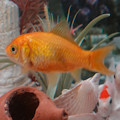 Following an epic tadpole story that did not turn out as planned, four goldfish came into my house with their aquarium. The aquarium was second hand, so the lighting was no longer in working order. No worries, we will repair it in the Yoctopuce way...
| No comment yet | Read more... |