A TypeScript app template project
 Building a web application, TypeScript is a clear step forward from JavaScript: its static type system catches a wide range of errors directly in your editor, before the code ever runs. But there is one drawback: browsers don't understand it natively, which means you'll need to set up a few tools...
| No comment yet | Read more... |
Improvements to SMS support
 Nowadays, messages exchanged between cell phones are rarely text messages (Short Message Service, or SMS), as smartphones favor the use of more flexible and secure messaging services. Nevertheless, SMS remains an attractive option as a network-independent validation method, particularly for automated systems. That is why we have recently improved the SMS sending and receiving functionality on the YoctoHub-GSM-4G.
| No comment yet | Read more... |
Advanced use of the typed Python library
 Nine months ago, we introduced a new Yoctopuce programming library for Python, completely rewritten to take advantage of the latest Python features, in particular typing and asynchronous coroutines. We had the opportunity to test it on several projects, where it performed very well, but we realized that some additional information might be useful. So here it is...
| No comment yet | Read more... |
Embedding Yocto-Visualization in a TypeScript WebApp
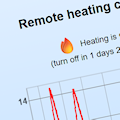 A few weeks ago, we showed you how to create a small WebApp for remote control of a heater using a simple HTML file and a few dozen lines of TypeScript code, thanks to VirtualHub for Web. This week, we'll take it one step further and enhance it by adding a graph showing the history of measured temperatures.
| No comment yet | Read more... |
A control WebApp with VirtualHub for Web
 Yoctopuce products enable you - among other things - to remotely control a device via the Internet. What's special about the Yoctopuce solution is that it's not based on a proprietary infrastructure, which could shut down any day and render all these systems inoperable, as has already happened far too often. Yoctopuce offers remote control tools which you are free to install on the host of your choice, and which you can move to another host in a few years' time if need be...
| No comment yet | Read more... |