First tests of the LIDAR-Lite telemeter
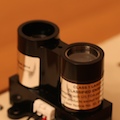 When you wanted to measure a distance at a precise location, there wasn't, up to now, any middle range between very expensive laser telemeters (of the Baumer type) and cheap sensors (of the Sharp type). These cheap sensors don't provide a real measured value and are very limited distance-wise. Therefore, we were particularly interested in the LIDAR-Lite project which announced a distance measure of several meters for under $100. Nine months later, the baby is here at last and we can test the final version of the product to try out this new technology.
| 2 comments | Read more... |
The quest for the ideal Mini-PC (second edition)
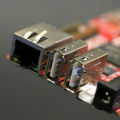 Almost two years ago, we wrote a quick review of some available mini PCs. Since then, new machines have appeared on the market. We tested some of them. Some were used to control some of our friday projects, others were bought just for the fun of playing with them. Here are some thoughts about these mini-PCs we tested...
| One comment | Read more... |
Building a RC car with Yoctopuce devices
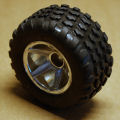 During the Yocto-Motor-DC test phase we have conducted quite a lot of experiments to make sure the device would be reliable and would not cause a fire on the first occasion. One of these experiments could be of some interest to you. We have been wondering if it was possible to build a radio controlled car using only Yoctopuce devices...
| 2 comments | Read more... |
SRF06: a cheap range finder
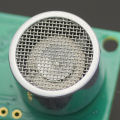 We are often asked if we have any plan for a range finder. Well, the answer is "no, not a this time". However, we do have some reasonable alternatives.
| No comment yet | Read more... |
Using OpenWrt with Yoctopuce USB devices
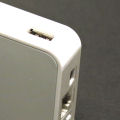 Do you know which is the smallest and cheapest machine, with Ethernet and Wifi network support, and to which we can connect Yoctopuce sensors and actuators? It's neither the Raspberry Pi, nor the BeagleBone. It's an even smaller machine, sold with an enclosure and a power cord, available in chain stores from $35: the TP-Link MR3020. When you take it out of the box, it's only a simple travel Access Point. But with a few clicks, you can install OpenWrt and new opportunities arise...
| 6 comments | Read more... |