Electromagnetic compatibility tests
 Those of you who have read our general terms and conditions know that Yoctopuce modules are not certified for any governmental compatibility standard (CE, FCC, and so on). As they are specialized components designed to be used in a larger system, and not end products for the general public, this is not strictly necessary to sell them in Switzerland. Nevertheless, we wanted to perform some measures to know where we stand with regard to these standards. So we visited a specialized laboratory with some of our modules ...
| 2 comments | Read more... |
Interfacing a rotary encoder with a Yocto-Knob
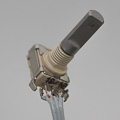 We already used the Yocto-Knob to interface potentiometers, buttons, photo-diodes, but never so far a rotary encoder. This week, we are going to see how to interface a rotary encoder with a Yocto-Knob to create a more advanced human-computer interface.
| 5 comments | Read more... |
How to desolder an electronic component
 Quite a while ago, we offered you a a brief soldering tutorial. Given the success of this post, we thought that you'd perhaps like us to explain how to desolder an electronic component without losing your mind...
| One comment | Read more... |
Transforming the Yocto-milliVolt-Rx into a USB ammeter
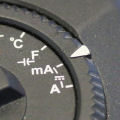 Last week, we presented our brand new USB voltmeter, the Yocto-milliVolt-Rx enabling you to measure voltages with an accuracy of the order of a ten of µV. Obviously, some of you asked: "Can we have the same thing with an ammeter?". Good news: it's almost trivial to transform the Yocto-milliVolt-Rx into an ammeter.
| 6 comments | Read more... |
Interfacing a building with a computer
 Electric circuits used in buildings for signalling and control have some specificities. When you know them, it is easy to drive them with Yoctopuce modules connected to a standard computer. This enables you to replace obsolete programmable logic controllers with systems much easier to program, while offering a much more modular solution than dedicated PCI interface cards.
| No comment yet | Read more... |