A new autoplacer robot
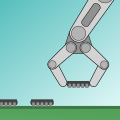 After 15 years of loyal service, our first autoplacer robot is reaching the end of its life. It's still working well, but given the difficulty in sourcing replacement parts, the manufacturer informed us this Spring that its support contract would end at the end of the year. So we had to break open our piggy bank to upgrade this key piece of equipment in our production process...
| No comment yet | Read more... |
Correcting the linearity of a PMP24 proportional relay
 Specialized online stores offer a variety of proportional control solid-state relays, enabling you to control, for example, the output power of a resistive heating element more precisely than with a simple on/off relay. However, these components are often not as proportional as their name suggests, which can affect how the control process works. So we're going to take a few measures to see if this can be improved.
| No comment yet | Read more... |
Recording animations with the Yocto-Watt-V2-C
 To illustrate last month's post on the operation of dimmers, we used small animations made manually on the basis of images produced by the Yocto-Watt-V2-C. In doing so, we thought it would have been handy if the Yocto-Watt-V2-C had been able to record measure sequences itself in animated form. So this week, we did just that :-)
| No comment yet | Read more... |
Can I use a dimmer switch with an LED bulb?
 With the disappearance of incandescent and halogen bulbs due to their poor energy efficiency, we're being encouraged to replace the bulbs in our lamps with equivalent LED bulbs. But if you're used to dimming your lights with a dimmer switch, you've probably noticed that your existing dimmer often doesn't work well with these new bulbs. Why is this, and how can we fix it?
| No comment yet | Read more... |
How to extend an I2C bus
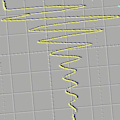 Following on from our quick tutorial on I2C, we're going to take a closer look at a particular case that often causes problems: the use of long wires for I2C communications. This is particularly true of Yoctopuce sensors that you can split, if you decide to offset the sensor part by several meters.
| One comment | Read more... |